Ben Reihanian S2B10 - What are Goosebumps?
What are Goosebumps?
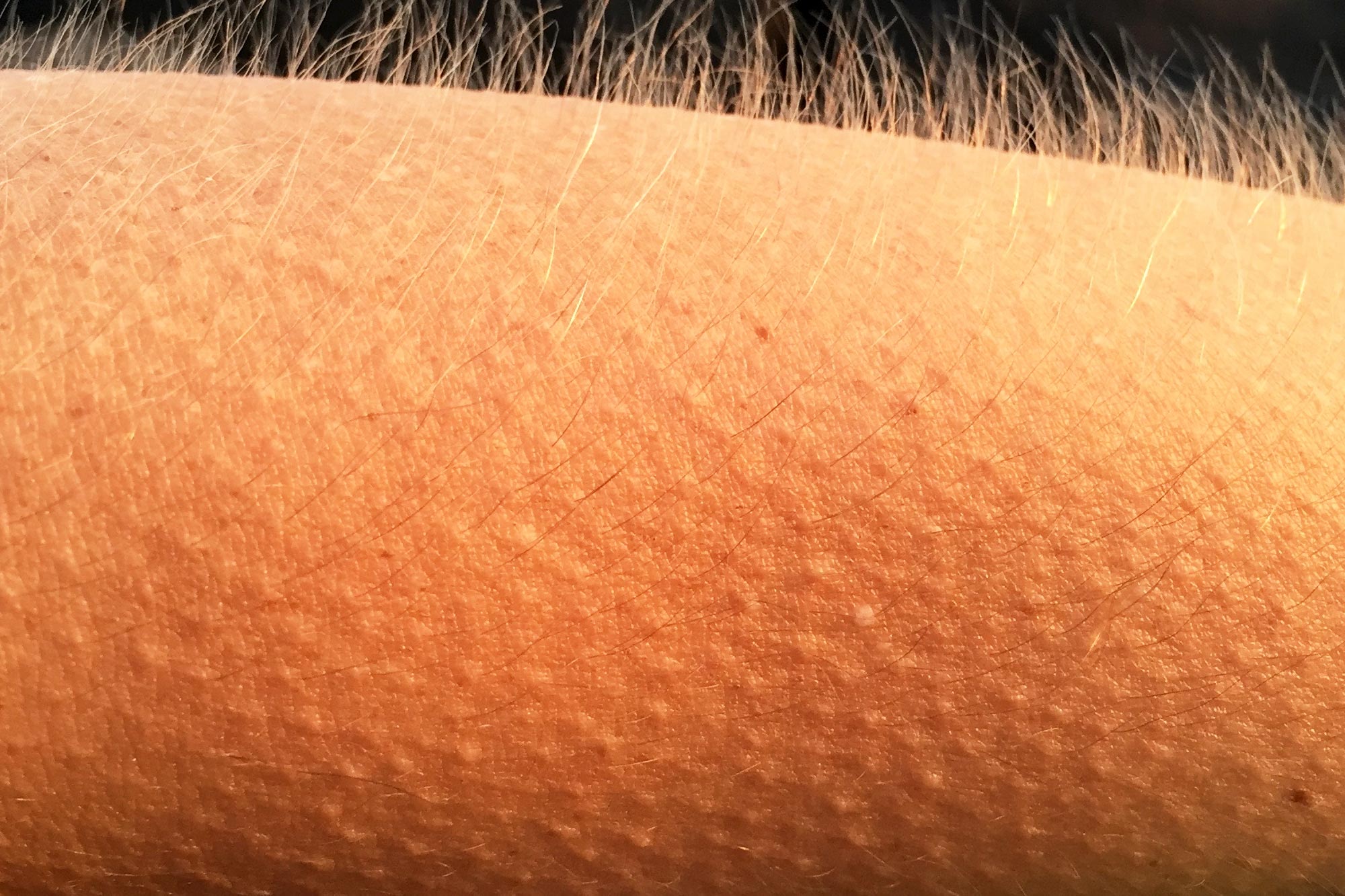
Goosebumps are little bumps that can appear anywhere on your body, but are most common on your arms and legs. It's a common occurrence when you're cold or experiencing a powerful emotion such as fear. You might notice small hairs developing on your arms and legs if you look intently. Each of these hairs is surrounded by small muscles, which draw together or contract when you get goosebumps. When this happens, the muscles and skin surrounding the hairs pull closer to your body, causing the hairs to stand up higher and giving you those small bumps!
They're called goosebumps because they resemble the skin of a goose behind the feathers. Goosebumps aren't actually felt by geese; they may expand their feathers, but it's not the same. Other animals, on the other hand, get goosebumps. Especially furry ones. The temperature, or how warm or cold it is, is one of the most prevalent causes of goosebumps in humans and other animals. Your body strives to keep warm while it's terribly chilly outside. Consider how you keep warm when it's cold outside: you might fold your arms or huddle up on your couch. When you do those things, you're trying to keep your body as close together as possible in order to retain your heat and to create a barrier between you and the chilly air outside. Goosebumps can assist with both. To keep your heat close, the muscles around your hairs contract, drawing them closer to your body. It also pushes your hairs out to try to create a thicker layer between you and the cold, almost like a layer of fur! However, because we humans lack fur, it isn't as effective as it would be for an animal with fur.
However, there are additional reasons why an animal might want a thick, fluffy coat of fur. When animals are startled or witness something frightening, such as a predator who might want to eat them, they may try to scare the predator away. That's why you've probably seen a cat's fur puff up when they're surprised. They're attempting to appear so large and intimidating that no one will want to mess with them.
If you have ever felt goosebumps while listening to a song then read on!
Some of us react to music more strongly than others. Listening to a certain song might give some people goosebumps and send shivers down their spines. There's more to it than some people simply liking music more than others, according to a new study published in the journal Social Cognitive and Affective Neuroscience. The researchers looked at 20 students, half of whom said they got shivers when listening to music. They looked at the differences between the two groups using Diffusion Tensor Imaging (DTI), which is an MRI scan that maps out the brain.
Chills were associated with a higher density of brain fibers connecting the areas of the brain that process auditory information and emotions. According to Matthew Sachs, a co-author of the study from the University of Southern California, more fibers equals more effective processing between the two areas. He also came to the conclusion that people with greater connections may experience more intense emotions in general, not just when listening to music.
“Emotional reactions to aesthetic stimuli are intriguing experiences to humans as they are profoundly pleasurable and rewarding, yet highly individualized," the study remarks. "Finding the behavioral and neural differences between individuals who do and do not experience such reactions may help gain a better understanding of the reward circuitry and the evolutionary significance of aesthetics for humans."
What song gives you goosebumps?


Usually sad songs about someone's love life gives me goosebumps. I am usually listening to these songs while driving and just decide to overthink the whole song while singing and listening to it.
ReplyDeleteIt is interesting to learn how awesome the human body is. It amazes me that we still wonder how we, ourselves, work. I experience goosebumps mostly when I am going through something that gives me nostalgia.
ReplyDeleteI find it so interesting how something as trivial as goosebumps had an evolutionary purpose. Perhaps in the future, like many other evolutionary traits, goosebumps will go away as humans no longer need it to survive. I tend to get goosebumps in reactions to very happy and very sad events, as well as important events occurring in my life (such as hearing life-altering news).
ReplyDeleteI usually get goosebumps when I get the chills, or I hear a really powerful song. It's so interesting how everyone's body is similar, but so different.
ReplyDelete